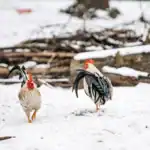
Quick answer: chickens are most afraid of predators, especially hawks overhead and dogs, foxes and raccoons on the ground, plus anything that acts like one: people looming over them, being chased or grabbed, sudden loud noises, fast movements and new objects. They scare easily because they are prey animals, and staying jumpy is how their wild ancestors survived.
If you have ever walked into the run carrying something new and watched the whole flock bolt for the far corner, you know how easily chickens spook. Mine still scatter when a big bird flies over, even though they have lived safely in our backyard for years.
The good news is that most of their fears are predictable. Once you know what scares chickens and why, you can set up their space and your routine so they spend far less time stressed.

What Are Chickens Afraid Of? 12 Common Fears
Here is a quick-reference list of the things that scare chickens most, why each one bothers them and what you can do about it.
| What scares them | Why | What to do |
|---|---|---|
| Hawks, owls and shadows overhead | Birds of prey are a top daytime predator, so chickens constantly watch the sky | Cover the run or add netting; give them shrubs, a table or a pallet lean-to to hide under |
| Dogs, cats, foxes and raccoons | They look and move like ground predators | Use secure fencing, lock the coop at night and train your dog to leave the flock alone |
| Snakes and rats | They raid nests and kill chicks | Seal gaps with hardware cloth and collect eggs daily |
| People looming over them | A hand reaching down from above looks like a hawk strike | Crouch to their level, move slowly and pick them up from below |
| Being chased | Being pursued is exactly what a predator does | Never chase; lead them with treats instead |
| Being grabbed or held | Being pinned feels like being caught | Hold the wings snug against the body and support the feet |
| Sudden loud noises | Fireworks, thunder, mowers and slammed doors signal danger | Shut them in the coop on fireworks nights and keep daily noise predictable |
| Flapping or fast-moving things | Tarps, plastic bags and umbrellas move unpredictably | Tie down loose items near the run |
| New objects | Anything new could be a threat (called neophobia) | Introduce new feeders or toys slowly and give them a few days |
| Bossy flockmates | Low-ranking hens get pecked and chased | Give extra feeders, space and hiding spots |
| New chickens or a new home | Strangers and unfamiliar places upset the pecking order | Introduce newcomers gradually and move birds at night |
| Strangers (or you in a new hat) | Chickens notice unfamiliar shapes and colors | Let visitors sit quietly and offer treats |
Why Are Chickens So Afraid?
Chickens are prey animals. Their wild ancestor, the red junglefowl, was hunted by cats, birds of prey, snakes and other predators, so the birds that survived were the ones that ran first and asked questions later. That flight response is still built into today’s backyard hens, even though they have not lived wild for thousands of years.
Their eyes help too. Chickens have eyes on the sides of their heads and a field of view of around 300 degrees, so they spot movement almost all the way around them. You can read more about that in our guide to how chickens see.
How jumpy a chicken is also depends on two things:
- Breed. Calm, heavy breeds such as Orpingtons, Brahmas and Cochins tend to be easygoing. Lighter, flightier breeds such as Leghorns are much quicker to bolt.
- Upbringing. Chicks that are handled gently from the first days are far less fearful of people than birds raised with little human contact. Research summarized by Poultry Extension notes that early handling cuts down on chick distress calls.
What Do Chickens Do When They Are Scared?
They sound the alarm
Chickens have different alarm calls for different dangers. Researchers have found that roosters give one call for threats from the air and another for threats on the ground, and hens react to each one differently (Evans and colleagues). In my yard, a hawk call sends everyone diving under the bushes, while a cat by the fence gets a loud, repeated cackle and a lot of staring.
They run or fly
Running is the first choice, and chickens are surprisingly fast. When one bolts, the rest follow. If running is not enough, they flap up onto a fence, a low branch or the coop roof. Chickens are not great fliers, but they can get high enough to escape a dog.
They freeze or crouch
Sometimes a frightened chicken goes completely still. A hen that squats flat when you reach for her, or a bird that lies motionless after being flipped over, is showing a freeze response. It is a defense that makes a predator lose interest, not a sign she is calm.
The rooster fights back
If you have a rooster, he may stand his ground and attack the threat while the hens escape. That instinct can be turned on people too, and rooster spurs are sharp. If yours sees you as a threat, read our tips on handling an aggressive rooster.

Why Are My Chickens Scared of Me?
To a chicken, you are a very large animal that walks upright, moves fast and reaches down from above. That is exactly how a predator looks. Most of the time it is not personal; it is how you approach them.
The usual culprits are walking straight at them, reaching over their backs, chasing a bird to catch her and only showing up to grab someone for a health check. Flip that around: crouch down, let them come to you, bring treats and spend boring, quiet time in the run. Our step-by-step guide on how to get chickens to trust you covers this in detail.
Are Chickens Scared of the Dark?
Not exactly, but they are vulnerable in it. Chickens have poor night vision, so they head to the roost at dusk and settle down quietly. A sudden light, noise or animal in the coop at night will panic them because they cannot see well enough to escape. That is why a coop that locks up tight every night matters so much. If yours suddenly refuse to go in, see why chickens stop going into the coop at night.
Can Chickens Be Scared to Death?
Yes, it can happen. A predator attack, even one where no bird gets bitten, can send chickens into shock. Panicked birds may also pile into a corner and smother the ones at the bottom. If a hen seems limp, glassy-eyed or unresponsive after a scare, move her somewhere warm, dark and quiet and follow our guide to treating shock in chickens.
Ongoing fear matters too. Stressed chickens eat and drink less, lay fewer eggs and pick fights, so a calm flock is a healthier one. Watch for the signs of a sick chicken after any big fright.
What Deters Chickens From the Garden?
If you are on the other side of this question and want to keep chickens out of a flower bed, physical barriers work best. A low fence, bird netting or chicken wire laid flat over seedlings stops scratching. Motion-activated sprinklers work for a while. Scarecrows, spinning pinwheels and shiny tape usually scare them for a few days, then the flock gets used to them and goes right back to digging.
How to Help Scared Chickens Feel Safe
- Give them cover. Bushes, a covered corner of the run or a simple pallet lean-to lets them hide when a hawk passes over. See our tips on protecting chickens from hawks.
- Keep a routine. Same time for food, treats and lock-up each day.
- Move slowly and talk to them. They learn your voice quickly.
- Never chase them. Herd with a treat cup or wait until they roost to pick someone up.
- Keep pets separate until you are sure your dog will leave the flock alone.
- Ease in newcomers. Follow a slow introduction to the flock and give low-ranking hens extra feeders so they are not bullied. Learn more about the pecking order.
Fear is normal for chickens and it keeps them alive. With some cover, a predictable routine and a little patience, even a flighty flock will come running when they see you instead of running away.
Keep reading
Frequently Asked Questions
What are chickens most afraid of?
Chickens are most afraid of predators, especially hawks and other birds of prey overhead, and dogs, foxes, raccoons and cats on the ground. They also fear anything that behaves like a predator, such as people reaching down from above, being chased or grabbed, sudden loud noises and new objects.
Why are my chickens afraid of me?
To a chicken, a person is a large animal that moves fast and reaches down from above, just like a predator. Chasing them, grabbing them and only visiting to catch someone makes it worse. Crouch down, move slowly, bring treats and spend quiet time in the run to build trust.
What do chickens do when they are scared?
Scared chickens give alarm calls, run for cover or fly up onto a fence or branch, and the rest of the flock follows. Some freeze or crouch flat. A rooster may stand his ground and attack the threat while the hens escape.
Can a chicken be scared to death?
Yes. A predator attack can send chickens into shock even if they are not bitten, and panicked birds can pile up in a corner and smother each other. Move a limp or unresponsive bird somewhere warm, dark and quiet and treat her for shock.
Are chickens scared of the dark?
Chickens are not scared of the dark itself, but they have poor night vision and feel vulnerable, so they roost at dusk and stay still. A sudden light, noise or animal in the coop at night can panic them because they cannot see to escape.
What is the fear of chickens called?
The fear of chickens in people is called alektorophobia. It comes from the Greek word alektor, meaning rooster, and phobos, meaning fear.