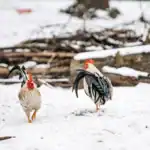
Quick answer: no, adult chickens do not need food or water at night. They sleep on their roosts from dusk to dawn and will not get down to eat or drink, so feeders and waterers can stay in the run as long as they are full first thing in the morning.
The exceptions are baby chicks in a brooder, which do eat and drink through the night, and broody hens, who sneak off the nest whenever they can. Here is what I leave out overnight for each, and whether food and water belong inside the coop at all.
What to leave out at night, by age
| Bird | Food at night? | Water at night? | Where |
|---|---|---|---|
| Chicks in a brooder (0 to about 6 weeks) | Yes, always | Yes, always | In the brooder, away from the heat source |
| Chicks with a mother hen | Not needed overnight | Not needed overnight | Within easy reach of the nest at dawn |
| Adult hens and roosters | No | No | Run or just outside the pop door, full by sunrise |
| Broody hen sitting on eggs | Within a few steps of the nest | Within a few steps of the nest | Near her, but not in the nest box |
| Hens locked in late or let out late | Helpful | Helpful | Inside, if there is room and it stays dry |
| Any age in a heat wave (85°F and up) | Not needed | Yes, have it ready at first light | Shaded, as close to the roost as practical |
Do chickens eat at night?
No. Adult chickens do not eat at night. They are diurnal birds with poor night vision, so once the light fades they head to the roost and stay put until dawn. Their metabolism slows while they sleep, and they fill up before bed instead. If you pick up a hen at dusk, you will usually feel a crop as full as a golf ball.
When I started keeping chickens, I left a full feeder in the coop every night. In the morning it had not been touched. What actually matters is that they get enough during the day. If your feeder is empty a few hours before sunset, put out more. I explain how much in how much to feed chickens per day.
If you see your hens up and about after dark, something is off: a light in the coop, a predator, mites in the roost, or a coop they do not want to go into. See why chickens stop going into the coop at night.

Do chickens need water at night?
Not while they are asleep. A healthy adult goes the whole night without a drink. Water only becomes urgent once they are awake. In mild weather an adult can last around a day without water, but in heat it can be fatal in under a day, so the waterer has to be full by the time the pop door opens. I break down the limits in how long chickens can go without water or food.
Summer is the time to be most careful. Chickens cool themselves by panting, and the University of Minnesota Extension notes they can drink two to four times their usual amount during heat stress. On a hot night, a stuffy coop and an empty waterer at dawn are a bad combination, so I fill it in the evening and put it in the shade.
Should food and water be inside the coop or in the run?
For most backyard flocks, the run is the better place, as long as the run is covered or the feeder has a rain guard. That is where I keep mine. But there are good reasons for either choice.
Reasons to keep food and water inside the coop
- Food stays dry on rainy days
- Hens can eat when they shelter inside on very hot or cold days
- Wild birds and other animals cannot get to it at night
- If you sleep in or are late letting them out, they are not stuck hungry and thirsty
Reasons to keep food and water in the run
- Spilled water makes coop bedding damp, which leads to mold, ammonia and respiratory problems
- Feed in the coop attracts rats and mice into the place your hens sleep
- Many small coops do not have the floor space
- It is easier to reach, refill and clean
- It gets the hens outside and moving in the morning
Whichever you choose, use a covered feeder, put feed away in a lidded bin at night (see how to store chicken feed), and never put the waterer under the roosts, where it fills with droppings overnight. If you want water inside, a nipple waterer spills far less than an open font.
Do baby chicks need food and water at night?
Yes. Chicks in a brooder need food and water available 24 hours a day. They sleep in short bursts, wake, eat a little, drink a little and go back under the heat. They have tiny reserves, and a chick without water for more than a few hours can die, especially near a heat lamp.
Use a chick waterer with a narrow lip, not a bowl. Deep dishes are a drowning risk, and open ones get filled with bedding and soak the brooder. Damp bedding chills chicks and breeds illness. Keep the waterer away from the heat source so it does not get warm. My full setup is in how to raise baby chicks without a hen, and what to feed is in what do baby chicks eat.
Many keepers turn the lights out or switch to a dim red heat source for chicks at about two to three weeks old so they learn a day and night rhythm. Even then, I leave the feeder and waterer full.

What about chicks raised by a mother hen?
Chicks with a mother hen sleep under her all night and do not eat or drink until morning, just like her. Put chick crumbs and a shallow chick waterer close to where she settles, so the first thing they find at dawn is food and water.
Do broody hens need food and water at night?
A broody hen leaves her eggs only once or twice a day for a quick meal, drink and dropping. Some do it at odd hours. I keep a small feeder and waterer a few steps from a broody hen, but not inside the nest box, where spills would chill the eggs. More on that in how to care for a broody hen.
Winter nights: frozen waterers
In freezing weather, water left out overnight turns into a block of ice by morning. Your hens do not need it while they sleep, but they need it when they wake. Bring the waterer in at night and set it back out at dawn, swap in a second one, or use a heated base. Keeping waterers out of the coop in winter also cuts down on the moisture that causes frostbite. See can chickens survive winter for more cold-weather tips.
How much food and water do chickens need each day?
- Food: about a quarter pound (4 to 5 ounces) of layer feed per standard-size hen per day, less for bantams and free-rangers.
- Water: about a pint (roughly 500 ml) per hen in mild weather, and two to four times that in a heat wave. Twenty hens need at least 10 liters (about 2.5 gallons) a day.
- Ratio: chickens drink more water than they eat in feed. The University of Georgia puts it at roughly 1.5 to 2 times feed by weight.
A good test: if a little feed is left at bedtime, you are feeding the right amount. If the feeder is empty well before sunset, put out more, so the hens lowest in the pecking order get their share.
Do chickens need a feeding schedule?
Not really. Chickens graze all day, so the simplest routine is to fill the feeder and waterer every morning and let them eat when they want. Free-range birds will eat less feed because they forage. What helps most is consistency: check water at the same time every day, top up in the evening on hot days, and keep treats to a small handful so they still eat their balanced feed.
The bottom line: adult chickens sleep through the night without needing food or water, so feed and water can live in the run. Fill them at first light, keep chicks supplied 24 hours a day, and give broody hens water within a few steps of the nest.
Keep reading
Frequently Asked Questions
Do chickens need food and water at night?
No, adult chickens do not need food or water at night. They sleep on their roosts from dusk to dawn and will not get down to eat or drink. Make sure the feeder and waterer are full first thing in the morning. Chicks in a brooder are the exception and need both 24 hours a day.
Do chickens eat at night?
No. Chickens are diurnal with poor night vision, so they fill their crops before bed and sleep until dawn. If your chickens are up and eating after dark, check for a coop light, predators, mites or a coop they do not want to go into.
Should food and water be inside the coop or in the run?
For most flocks the run is better, as long as feed is protected from rain. Keeping food and water in the coop keeps feed dry and away from wild animals, but spilled water makes bedding damp and feed attracts rodents. Never put a waterer under the roosts.
Do baby chicks need food and water at night?
Yes. Chicks in a brooder wake up through the night to eat and drink, and can die after a few hours without water. Keep feed and a chick waterer full 24 hours a day, away from the heat source. Chicks with a mother hen sleep under her and eat in the morning.
Can chickens go all night without water?
Yes, healthy adult chickens go all night without drinking. Water becomes urgent once they wake, especially in hot weather when they can drink two to four times their usual amount, so have a full, shaded waterer ready at first light.
How much water does a chicken drink per day?
A laying hen drinks about a pint (roughly 500 ml) of water a day in mild weather and two to four times that in a heat wave. Twenty hens need at least 10 liters (about 2.5 gallons) a day. Chickens drink more water than they eat in feed.