Quick answer: the best cold hardy chicken breeds are heavy, densely feathered birds with small combs, such as the Chantecler, Buckeye, Wyandotte, Brahma and Dominique, followed closely by Orpingtons, Australorps, Plymouth Rocks and Rhode Island Reds. If you want eggs through the winter too, Australorps, Wyandottes, Rhode Island Reds, Brahmas and Chanteclers are the strongest picks.
Almost any healthy adult chicken can get through a cold winter in a dry, draft-free coop. Breed decides how easy it is. A big-bodied hen with a tiny comb shrugs off a week at 0°F, while a light hen with a tall single comb is the one I end up checking for frostbite. If you live where winters are long, choose your breeds before you order chicks. This guide goes deeper than the breed section of my main winter chicken care guide.
What Makes a Chicken Breed Cold Hardy?
Four things matter, roughly in this order.
1. A small comb and wattles
The comb and wattles are bare, blood-rich skin, and they are where frostbite almost always starts. The less of them sticking up into cold, damp air, the better. Pea, rose, walnut and cushion combs sit low and tight to the head. Big single combs, especially on roosters, have thin points that freeze first. Small wattles matter too, because long wattles dip into the waterer and then freeze wet.
2. A heavy body
A large bird has less skin surface for its weight, so it loses heat more slowly than a small one. That is why the big American, English and Asiatic breeds handle winter better than light Mediterranean breeds and bantams. The University of Minnesota Extension notes that heavier breeds such as Plymouth Rocks, Wyandottes, Ameraucanas and Orpingtons over-winter well, while smaller breeds with less feathering or large combs may need extra care (UMN Extension).
3. Dense, tight feathering
Feathers only insulate when they trap still, dry air. Breeds with plenty of soft down under firm outer feathers stay warmest. Very loose fluff, like a Silkie’s, looks warm but soaks up rain and snowmelt and then holds the cold against the skin. Frizzles have the opposite problem: their curled feathers do not lie flat, so wind gets straight through.
4. Feathered feet: a trade-off
Brahmas, Cochins and Faverolles have feathered legs and toes. On dry snow that extra coat helps. In mud, slush or wet litter the foot feathers clump with ice and muck, and The Livestock Conservancy warns this can actually raise the risk of frostbitten toes. If you keep feather-footed breeds, keep the run and the litter dry. My post on frostbite in chickens covers what to look for.
Cold Hardy Chicken Breeds Chart
Here are 16 breeds and types that do well in cold climates. Egg counts are typical yearly ranges for good backyard strains, and they match my chicken breeds chart. Hen weights come from The Livestock Conservancy breed pages. “Winter laying” rates how well the breed keeps up some production through short days without extra light.
| Breed | Comb | Hen size | Eggs per year | Egg color | Winter laying | Temperament |
|---|---|---|---|---|---|---|
| Chantecler | Cushion | Large, about 5.5 to 7.5 lb | 120 to 180 | Brown | Good | Docile |
| Buckeye | Pea | Large, about 6.5 lb | 150 to 200 | Brown | Fair | Friendly, active |
| Wyandotte | Rose | Large, about 6.5 lb | 180 to 260 | Brown | Good | Docile |
| Brahma | Pea | Very large, about 10 lb | 180 to 240 | Brown | Very good | Calm, slow moving |
| Dominique | Rose | Medium, about 5 lb | 230 to 275 | Brown | Fair | Active, friendly |
| Buff Orpington | Single | Large, about 8 lb | 200 to 280 | Brown | Fair | Docile, affectionate |
| Australorp | Single | Large, about 6.5 lb | 250 to 300 | Brown | Good | Docile |
| Plymouth Rock | Single | Large, about 7.5 lb | 200 to 250 | Brown | Good | Friendly |
| Rhode Island Red | Single or rose | Large, about 6.5 lb | 250 to 300 | Brown | Good | Calm |
| Ameraucana | Pea | Medium, about 5.5 lb | 200 to 250 | Blue | Fair | Calm, friendly |
| Easter Egger | Usually pea | Medium, varies | 200 to 280 | Blue, green | Fair | Varies |
| Speckled Sussex | Single | Large, about 7 lb | 250 to 300 | Light brown | Good | Docile, curious |
| Faverolles | Single (with beard and muffs) | Large, about 6.5 lb | 180 to 200 | Tinted | Good | Docile but active |
| Cochin | Small single | Very large, about 8.5 lb | Up to 140 | Brown | Fair | Docile |
| Jersey Giant | Single | Giant, 10 to 11 lb | 175 to 185 | Brown | Good | Docile |
| Delaware | Single | Large, about 6 lb | 150 to 200 | Brown | Fair | Docile |
Every breed lays less in winter, because laying is driven by day length, not temperature. Penn State Extension notes production drops or stops as days fall below about 12 hours, and hens need around 16 hours of light to lay at full speed (Penn State Extension). A good winter layer just slows down less.
The Best Cold Hardy Chicken Breeds, One by One
Chantecler
If you live somewhere truly frigid, start here. The Chantecler was developed from 1908 at the abbey in Oka, Quebec, specifically to handle Canadian winters, and it became Canada’s first chicken breed. Its cushion comb is a small, low pad with almost no wattles, so there is very little to freeze. The Livestock Conservancy describes it as a good winter layer that does not do well in hot climates, so it suits the far north better than the South.
Buckeye
The Buckeye was created in Ohio by Nettie Metcalf and is the only American class breed credited entirely to a woman. It has a pea comb and a solid, muscular build, and The Livestock Conservancy calls it very cold-weather hardy. Buckeyes are busy foragers and famously unafraid of people. They are a heritage breed, so you may need a specialty hatchery or breeder to find them.
Wyandotte
Wyandottes are my favorite all-round answer to “what should I get for a cold yard?” They have a low rose comb with small rounded points, a broad, well-feathered body and a calm temperament, and they come in lovely colors like Silver Laced, Golden Laced and Blue Laced Red. They lay steadily into the cold months. The one weakness is summer heat, so give them shade if your summers are hot.
Brahma
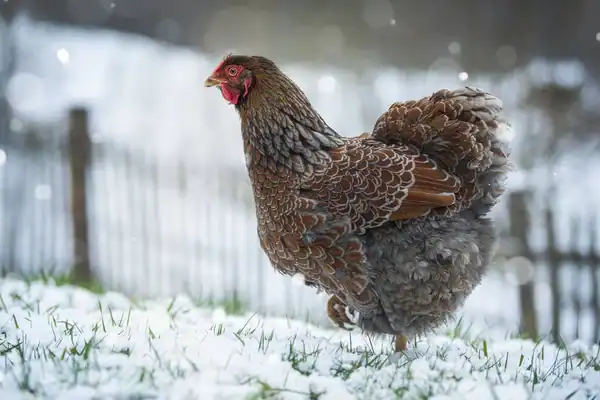
Brahmas are gentle giants, with hens around 10 pounds, a small pea comb and feathered feet. The Livestock Conservancy calls them one of the least cold-susceptible chickens and a superior winter layer that produces most of its eggs from October to May. That makes them one of the best answers to “which chickens lay in winter?” Keep their foot feathers out of mud, and use a sturdy, low roost for such a heavy bird.
Dominique
America’s oldest breed has a rose comb and tight, close feathering, which The Livestock Conservancy says makes it more frostbite-resistant than many breeds. Dominiques are medium sized, friendly and good with kids, and they also cope with hot, humid summers, which makes them a smart choice where you get both extremes.
Australorp, Plymouth Rock, Orpington and Rhode Island Red
These four are single-combed, but they are heavy, well feathered and very easy to find at farm stores, so they are what most cold-climate beginners end up with. Australorps and Rhode Island Reds are the best layers of the group at roughly 250 to 300 eggs a year. Plymouth Rocks feather early and are cold hardy, and Buff Orpingtons are the fluffiest and friendliest. Their hens’ combs are moderate in size and rarely trouble me, but roosters of these breeds can lose comb points in a hard freeze. If your winters are severe, look for rose-combed Rhode Island Reds, which are a recognized variety.
Ameraucana and Easter Egger
Want blue eggs in a cold climate? Ameraucanas have a pea comb plus a beard and muffs, which cover the face and leave very little exposed skin. Easter Eggers are mixed birds that usually inherit the pea comb and lay blue or green eggs. UGA Extension lists the Ameraucana as cold hardy.
Speckled Sussex and Faverolles
Both are calm, curious English and French breeds that do well in winter. Speckled Sussex are strong layers whose spotted feathers get prettier with every molt. Faverolles were developed for winter egg production and have a beard, muffs, feathered feet and five toes. Their single comb is modest, and the beard covers much of the face.
Cochin, Jersey Giant and Delaware
Cochins are huge balls of feathers that handle cold easily but lay fewer eggs and start late. Jersey Giants are the largest American breed, with hens around 10 to 11 pounds, and The Livestock Conservancy says they generally keep laying through winter, though roosters’ big single combs can frostbite. Delawares are friendly, fast-growing dual-purpose birds with a moderate single comb that is best protected in a very dry coop.
What Chickens Lay Best in Winter?
For eggs through the dark months, these are the breeds I would pick, in order:
- Australorp for the highest overall egg count with good cold tolerance.
- Rhode Island Red, especially rose-combed strains, for hardy, steady laying.
- Wyandotte for laying plus a frostbite-resistant comb.
- Brahma, which saves much of its laying for fall through spring.
- Chantecler for the coldest places, with fewer but steady winter eggs.
Age matters as much as breed. Pullets hatched in spring usually start laying in late summer or fall and often keep going through their first winter, while older hens tend to molt and take a break. Ordering a few chicks every spring keeps eggs coming. If your hens have stopped completely, my post on why hens stop laying eggs walks through the causes, and good winter nutrition helps too, which I cover in what to feed chickens in winter.

Which Chicken Breeds Struggle in Cold Weather?
You can keep these breeds in the north, but plan on more care in a deep freeze.
| Breed or type | Why the cold is hard on them | How to help |
|---|---|---|
| Leghorn | Light body and a large single comb; UGA Extension notes their combs can get frostbite | Very dry coop, petroleum jelly on combs before a deep freeze |
| Minorca and Andalusian | Very large single combs and long wattles | Same as Leghorns; watch roosters closely |
| Silkie | Fluffy feathers soak up water and do not shed it | Keep out of rain, slush and wet litter |
| Frizzle | Curled feathers let wind reach the skin | Solid wind breaks, a sheltered roost |
| Polish and other crested breeds | Crests get wet and freeze, and can hide frostbite | Keep crests dry, check them daily |
| Small bantams | Little body mass to hold heat | Roost them with bigger birds, consider a radiant panel below 0°F |
My breeds chart rates Silkies as fairly cold tolerant, and that is true when they are dry. Wet is what gets them. For the actual temperature limits by situation, see how cold chickens can tolerate.
Are There Cold Hardy Bantam Breeds?
Yes. Bantams lose heat faster than full-size birds, but bantam versions of hardy breeds handle cold much better than tiny ornamental types. Good options are bantam Wyandottes (rose comb), bantam Cochins (heavy feathering), bantam Brahmas (pea comb) and bantam Plymouth Rocks. Avoid relying on Silkie, Frizzle or Serama bantams in a cold, wet climate. If you are still deciding on size, here is how to choose bantams vs. standard chickens.
Does Breed Matter More Than the Coop?
No. A Chantecler in a damp, drafty coop will get frostbite before a Leghorn in a dry, well-ventilated one. Breed gives you a head start, but dry air, vents up high, no wind at roost level, flat roosts and unfrozen water do most of the work. Those basics are all in my guide to keeping chickens warm in winter.
Keep reading
Frequently Asked Questions
What is the most cold hardy chicken breed?
The Chantecler is often called the most cold hardy breed. It was developed in Quebec for Canadian winters and has a tiny cushion comb and almost no wattles. Buckeyes, Brahmas, Wyandottes and Dominiques are close behind thanks to their small pea or rose combs and heavy, well-feathered bodies.
What chickens lay eggs in winter?
Australorps, Rhode Island Reds, Wyandottes, Brahmas and Chanteclers are among the best winter layers. Brahmas lay most of their eggs from October to May. Every breed slows down as days get shorter, and young pullets hatched in spring usually lay better through their first winter than older hens.
What is the best chicken for cold climates for a beginner?
Wyandottes, Australorps, Plymouth Rocks and Buff Orpingtons are easy to find, calm, good layers and handle cold well. Wyandottes have the added benefit of a low rose comb that rarely gets frostbite.
What chickens do not do well in the cold?
Leghorns, Minorcas and other light breeds with large single combs are prone to frostbite. Silkies struggle when wet because their fluffy feathers soak up water, Frizzles let wind reach the skin, and small bantams lose heat quickly.
Do feathered feet help chickens in winter?
Only when it is dry. Feathered feet on Brahmas, Cochins and Faverolles add insulation on dry snow, but in mud or slush the feathers clump with ice and can raise the risk of frostbitten toes. Keep the run and litter dry for these breeds.
Are Rhode Island Reds cold hardy?
Yes. Rhode Island Reds are hardy, heavy birds that keep laying in marginal conditions. Most have single combs, which can frostbite on roosters, so in very cold areas look for the rose-combed variety.
Are bantam chickens cold hardy?
Bantams lose heat faster than standard birds, but bantam versions of hardy breeds such as Wyandottes, Cochins, Brahmas and Plymouth Rocks handle cold well in a dry, draft-free coop. Silkie, Frizzle and Serama bantams need the most help.