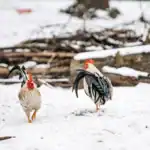
Quick answer: frostbite in chickens shows up as pale, then gray or black patches on the tips of the comb, wattles or toes. Treat it by moving the bird somewhere dry and sheltered, warming the area slowly (lukewarm water for feet, never direct heat), and leaving it alone: no rubbing, no popping blisters and no cutting off black tips. Prevent it by keeping the coop dry and well ventilated.
Most frostbite is a moisture problem dressed up as a cold problem. The good news is that it is rarely fatal, mild cases heal on their own, and nearly all of it is preventable. Below is how to recognize each stage, exactly what to do, and what not to do. For the wider picture of winter care, see my guide to keeping chickens warm in winter.

What Is Frostbite in Chickens?
Frostbite happens when fluid in the tissue freezes. The ice crystals kill cells and cut off blood supply to the area, so the tissue dies (Extension Poultry, frostbite in chickens). Chickens have feathers over almost everything, so it shows up on the bare parts: the comb, the wattles, and the toes and feet.
Dead tissue does not grow back. A comb that loses its points stays shorter for life, though the bird usually goes on to live a perfectly normal life.
Which Chickens Get Frostbite?
- Roosters. They are most often affected because their combs and wattles are bigger.
- Large single-combed hens. Leghorns, Minorcas and other Mediterranean breeds are high risk, according to the University of Maryland Extension.
- Birds with long wattles, especially ones that dip them in open water.
- Feather-footed breeds, when mud and slush freeze in their foot feathers.
- Sick, wet or older birds, and any bird roosting on metal or a narrow perch.
Pea, rose, walnut and cushion combs sit low and rarely freeze. If you are choosing birds for a cold climate, see cold-hardy chicken breeds.
What Causes Frostbite in Chickens? Humidity, Not Just Cold
UMN Extension says it directly: “The main causes of frostbite are high moisture and cold temperatures” (UMN Extension). Extension Poultry adds that it is most likely at night, in a cold, poorly ventilated coop with damp bedding, and mainly when temperatures reach the single digits and below.
Where does the moisture come from? Chickens breathe it out all night, their manure is about 70% water, and waterers spill. In a sealed coop it condenses on the walls and on combs, and wet skin freezes at temperatures dry skin would shrug off. Water dripping off wattles after a drink does the same thing.
What Does Frostbite Look Like on a Chicken? Stages at a Glance
Frostbite is often noticed only after the tissue thaws and swells, and the full extent can take a while to show. PoultryDVM notes that in birds the dead tissue may take 3 to 6 weeks to fully develop and separate (PoultryDVM). Here is roughly how the stages look:
| Stage | What it looks like | What to do | Likely outcome |
|---|---|---|---|
| Mild (frostnip) | Comb or wattle tips pale or off-white; feet slightly red; may feel cool and stiff | Move to a dry, sheltered spot; warm slowly; fix the coop moisture | Usually recovers fully |
| Moderate | Swelling, redness, blisters; tips turning gray or purplish; tender to touch | Warm slowly, leave blisters intact, separate from peckers, watch for infection | Some tips may darken and drop off |
| Severe | Black, dry, hard tissue; feet swollen, black or toes clenched; bird limping or reluctant to walk | Keep indoors and dry; call a vet, especially for feet | Dead tissue falls off; possible toe loss; heals over about 4 to 6 weeks or longer |
| Infected | More swelling and redness, discharge, bad smell; bird quiet or off feed | See a vet; antibiotics may be needed | Good if treated early |
How to Treat Frostbite in Chickens, Step by Step
- Bring her in. Move the bird to a dry, sheltered spot such as a dog crate in the garage or a quiet room. It doesn’t need to be toasty, just dry, still air and a few degrees warmer than outside.
- Warm it slowly. For feet, soak them in a shallow tub of lukewarm water that feels barely warm on your wrist, not hot, for a few minutes, then pat dry. For a comb or wattles, a dry, room-temperature space is usually enough, or a cloth dipped in lukewarm water held gently against the area.
- Skip direct heat. No hair dryer, heat lamp or heating pad on the frozen area. Frozen tissue can’t feel heat and burns easily.
- Do not rub or massage it. Rubbing grinds ice crystals through damaged tissue.
- Do not pop blisters. Extension Poultry calls them a natural Band-Aid protecting the tissue underneath.
- Keep it from refreezing. Thawing and refreezing does more damage than staying frozen, so don’t send her straight back to a cold, damp coop.
- Keep her apart if others peck. Chickens peck at red, damaged tissue. UMN Extension recommends separating a frostbitten bird so she can heal.
- Watch for infection over the next few weeks: swelling, more redness, discharge or a bad smell. Keep the area clean and dry.
- Let black tips fall off on their own. Never cut them. Trimming exposes the tissue beneath to more cold and to infection. The only exception is infected tissue, and that is a vet’s job.
Don’t give her human pain relievers. Extension Poultry warns that oral pain medications aren’t needed and some are lethal to chickens. If she seems to be in a lot of pain, that’s a reason to call a vet. If she’s cold, limp and unresponsive rather than just frostbitten, she may be in shock; see treating shock in chickens.
Why lukewarm and not hot water?
Extension Poultry advises “slightly warm” water and slow rewarming. Hot water is tempting when you’re worried, but numb tissue can’t sense it, so it scalds, and a sudden temperature jump adds to the damage. Slow and gentle wins.
Frostbite on Chicken Feet
Foot frostbite is less common than comb frostbite but more serious, because a hen has to stand and walk on those toes. Signs include swelling, redness that turns dark, toes that stay curled or clenched, limping, and later black, dry toe tips.
- Do the lukewarm soak, then dry the feet completely, including between the toes.
- Keep her on soft, dry bedding indoors and limit walking while the feet heal.
- Call a vet for anything beyond mild redness. Feet often need bandaging, and PoultryDVM lists daily Epsom salt soaks and prescription medicines as part of vet care.
Feet usually freeze when hens roost on narrow or metal perches, stand in wet snow for long stretches, or carry frozen slush in foot feathers. I go into this more in do chickens’ feet get cold?
How to Prevent Frostbite in Chickens
- Ventilate high, block drafts low. Vents near the roof let damp air out; the roost area stays out of the wind. If you see condensation on windows or walls in the morning or smell ammonia, add ventilation.
- Keep litter dry. Stir it, top it up and remove wet patches. The deep litter method helps if you keep it dry.
- Get water out of the coop. Keep it in the run, and consider horizontal nipple waterers so wattles stay dry. See how to keep chickens’ water from freezing.
- Use wide, flat wooden roosts. A 2×4 laid flat lets hens cover their toes with belly feathers. Avoid metal and plastic perches, which conduct cold.
- Don’t seal the coop. A closed-up coop traps exactly the moisture that causes frostbite.
- Pick breeds with small combs if you live somewhere with long, hard winters.
Does Vaseline Prevent Frostbite on Chicken Combs?
This one divides chicken keepers, so here is the evidence as fairly as I can lay it out.
- For it: UMN Extension and the University of Maryland Extension both say petroleum jelly can be applied to combs and wattles to help protect them, and Extension Poultry says it helps with mild freezing. Many keepers with Leghorns and roosters swear by it.
- Against it: no published study tests it on chickens. A study of people in the cold (Acta Dermato-Venereologica, 2000) found that emollients including white petrolatum did not warm skin and more often cooled it, and that the false sense of protection was linked to more frostbite. Applying it also means handling every bird on frigid nights.
- Everyone agrees on: it does not treat frostbite once it has happened, and coop management matters far more.
My take: a thin layer on a big single comb before a deep freeze is unlikely to hurt and may help a little, but it is not a substitute for a dry coop. If your hens are getting frostbite, fix the moisture first.
When to Call a Vet
- Any frostbite on the feet beyond mild redness
- Swelling, discharge, a bad smell or spreading redness, which signal infection
- A bird that stops eating, drinking or walking
- Large areas of black tissue, or you’re unsure how bad it is
PoultryDVM stresses that treatment works best when it starts early, before tissue dies. A frostbitten hen that is also lethargic may have something else going on, so check for other signs of illness.
How Long Does Frostbite Take to Heal?
Mild cases settle within days. Where tissue has died, Extension Poultry says healing can take four to six weeks, and severe foot cases can take longer. Black tips dry out and drop off on their own during that time.
Can a Rooster Still Breed After Frostbite?
Usually, yes. Extension Poultry notes that very low temperatures can reduce egg production and fertility in a flock whether or not frostbite is visible, and that birds regain their reproductive status as temperatures warm. A rooster with a shortened comb can breed normally once he’s healed.
The Bottom Line
Warm it slowly, keep it dry, leave it alone and let it heal. Then go and look at your coop’s moisture, because that is where frostbite really starts. For the temperatures to watch, see how cold chickens can tolerate, and for comb issues beyond the cold, common chicken comb problems.
Keep reading
Frequently Asked Questions
What does frostbite look like on a chicken comb?
Early frostbite makes the tips of the comb pale or off-white. As it worsens the area swells, may blister, then turns gray and finally black, dry and hard. The black tips usually fall off on their own over several weeks.
How do you treat frostbite on a chicken’s comb?
Move the bird to a dry, sheltered spot and let the comb warm slowly. Do not use direct heat, do not rub it, do not pop blisters and do not cut off black tips. Separate her if others peck at it and watch for infection.
Will a frostbitten comb grow back?
No. Dead tissue does not regrow, so a comb that loses its tips stays shorter. The bird usually lives a normal life afterwards.
At what temperature do chickens get frostbite?
There is no single number, because moisture matters as much as cold. Extension sources say it is most likely in the single digits and below, especially at night in a damp, poorly ventilated coop. Wet combs can freeze at milder temperatures.
Should I put Vaseline on my chickens’ combs?
Extension sources say petroleum jelly can help protect large combs in mild freezing, but there is no research on chickens and it does not treat frostbite. A dry, well-ventilated coop matters far more.
Should I cut off black frostbitten comb tips?
No. Let them fall off on their own. Cutting exposes the tissue underneath to cold and infection. Infected tissue should be handled by a vet.
Can chickens die from frostbite?
Frostbite itself is rarely fatal, but infection and severe foot frostbite can be serious. Call a vet if you see swelling, discharge, a bad smell, or a bird that stops eating or walking.