Quick answer: Most backyard chickens do not need routine deworming. Worm them when a fecal test shows a heavy worm load or they show signs like weight loss, pale combs, diarrhea or a drop in laying. In the US, fenbendazole (Safe-Guard AquaSol) is the FDA-approved dewormer for chickens, including laying hens, with no egg withdrawal when you follow the label.
Worms make most of us squeamish. The first time I saw something wriggly in a dropping, I wanted to run to the feed store and treat everyone. Here is what I have learned since about when worming actually makes sense, how to test first, and what is safe if you eat your hens’ eggs.
Do Chickens Need Deworming?
Almost every chicken that goes outside carries a few worms. A small number usually does no harm, and healthy adult birds build up some resistance. The problem is a heavy load, which robs the bird of nutrients and can make her sick.
Extension poultry specialists describe two approaches: worming on a schedule, or worming only when the worm burden is high. Which one fits depends on your flock size, how much ground they range on and your flock’s history. For most small backyard flocks, I prefer testing first and treating only when needed. Worming too often wastes money and helps worms become resistant to the drugs.
Chicken Worms Quick Reference Table
| Worm | Where it lives | Common signs | How chickens get it | Approved US treatment |
|---|---|---|---|---|
| Large roundworm (Ascaridia galli) | Small intestine | Weight loss, diarrhea, pale comb, worms in droppings | Eating eggs from droppings in soil or litter | Fenbendazole (Safe-Guard AquaSol) |
| Cecal worm (Heterakis gallinarum) | Ceca | Usually none; can carry blackhead disease to turkeys | Droppings, earthworms | Fenbendazole (laying hens and breeders) |
| Capillary or threadworm (Capillaria) | Crop, esophagus or intestine, by species | Weakness, weight loss, poor appetite | Droppings, some types via earthworms | None approved; vet prescription needed |
| Gapeworm (Syngamus trachea) | Windpipe | Gasping, open-mouth breathing, head shaking | Earthworms, snails, slugs | None approved; vet prescription needed |
| Tapeworm | Intestine | Weight loss, white segments in droppings | Eating beetles, flies, snails, slugs or ants | None approved in the US |
| Eyeworm (Oxyspirura mansoni) | Under the third eyelid | Watery, swollen, scratched eyes | Cockroaches, in warm southern climates | Vet treatment |
Sources: the Merck Veterinary Manual and Penn State Extension.
What Types of Worms Do Chickens Get?
Roundworms
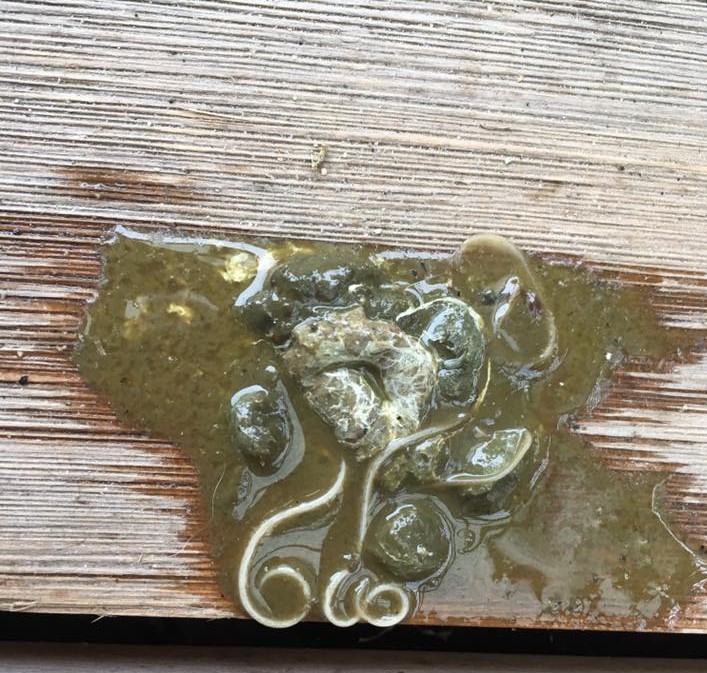
Large roundworms (Ascaridia galli) are the most common worms in chickens. They are thick, white and can grow several inches long in the small intestine. Young birds are hit hardest. A heavy load causes weight loss, diarrhea and poor growth, and in severe cases the worms can block the gut.
Capillary Worms (Threadworms)
Capillary worms (Capillaria) are hair-thin and hard to see. Depending on the species, they live in the crop and esophagus or in the intestine. They cause inflammation, and a heavy infection leads to weakness, poor appetite, weight loss and sometimes death.
Gapeworms
Gapeworms (Syngamus trachea) are red, Y-shaped worms that attach inside the windpipe. A badly infected bird stretches her neck and opens her beak, gaping, as she struggles to breathe. Young birds are most at risk, and it can be fatal. Chickens usually pick them up by eating earthworms, snails or slugs.
Tapeworms
Tapeworms are flat, segmented worms in the intestine. Chickens get them by eating an infected insect or snail, such as beetles, houseflies, slugs or ants. They mostly cause weight loss. No tapeworm treatment is approved for chickens in the US, so controlling flies, beetles and slugs around the coop is the main defense.
Cecal Worms
Cecal worms (Heterakis gallinarum) live in the ceca, the two pouches where the small and large intestines meet. They rarely make chickens sick, but they can carry blackhead disease, which is deadly for turkeys. If you keep turkeys with your chickens, this one matters.
Eyeworms
Eyeworms (Oxyspirura mansoni) live under the third eyelid and are found in warm southern climates, where chickens get them by eating cockroaches. They cause watery, swollen, irritated eyes, and the bird may scratch at her face.
How Can You Tell if a Chicken Has Worms?
Signs of a heavy worm load include:
- Weight loss, especially a sharp keel bone you can feel
- Pale comb and wattles
- Diarrhea or a messy vent
- Fewer eggs
- Gasping or head shaking (gapeworm)
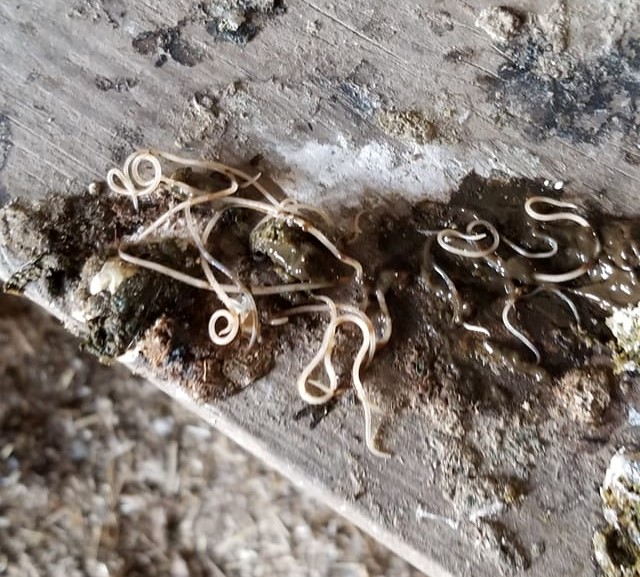
- Worms or white segments in the droppings
The catch is that most of these signs are not specific to worms. A hen can be pale and thin from molting, mites or other illness, and many wormy birds show no signs at all. That is why testing beats guessing.
Fecal Float Test
A fecal float is a cheap test where a vet clinic or lab mixes a fresh dropping with a special solution so worm eggs float to the top and can be counted under a microscope. Collect a fresh sample from several birds in a clean bag, keep it cool and drop it off the same day. Eggs are shed on and off, so one negative test does not prove a bird is worm-free, and testing again in a few weeks is worth it if signs continue.
When to Worm Chickens
- When a fecal test shows a heavy worm load
- When you see worms in droppings along with weight loss, pale combs or poor laying
- When your vet recommends it, for example after a necropsy finds worms
- Some keepers on heavily used ground test in spring and fall, when worms are most active, and treat only if needed
How Often Should Chickens Be Wormed?
There is no single schedule that fits every flock. Small flocks with plenty of space may never need it. Flocks kept on the same small patch of ground for years build up more worm eggs in the soil and may need treatment more often. Test, then treat based on what you find. Worming on a fixed calendar without testing can lead to drug resistance.
What Is the Best Dewormer for Chickens?
In the US, fenbendazole sold as Safe-Guard AquaSol is the dewormer approved by the FDA for chickens. It was first approved in 2015 for broilers and breeders, and the approval was extended to laying hens in 2018. It is added to drinking water over several days and treats adult large roundworms, plus cecal worms in laying hens and breeders. It is sold over the counter at farm stores.
Follow the label exactly for dose and length of treatment, and talk to your vet if you are unsure. Using any dewormer differently from the label, including horse, goat or dog products in chickens, is extra-label use and legally needs a vet’s prescription. That includes treating gapeworms, capillary worms and tapeworms, which the approved product does not cover.
Piperazine (Wazine), which many older guides recommend, is no longer sold in the US.
Do Natural Dewormers Work?
Garlic, pumpkin seeds, diatomaceous earth and herbal blends such as Verm-X are popular. There is little solid research showing they clear an existing worm load. I think of them as part of general flock care, not a treatment. If a fecal test shows a heavy load, use an approved product.
How Long After Worming Chickens Can You Eat the Eggs?
With Safe-Guard AquaSol used according to the label, there is no egg or meat withdrawal, so you can keep eating the eggs. For any other product, or any off-label use, there is a withdrawal time that your vet sets, and it can be long. Do not eat or sell eggs until that time has passed. Your vet can check withdrawal times through FARAD, the Food Animal Residue Avoidance Databank.
At What Age Do You Worm Chickens?
Check the label for the ages and types of chickens it covers. Young birds are most at risk from roundworms and gapeworms, so if young pullets on outdoor ground are thin and slow to grow, a fecal test is a good idea. Avoid worming birds that are already stressed by heat or a move unless your vet advises it.
Can You Eat Eggs From a Chicken With Worms?
Yes. The common chicken roundworm infects birds, not people, and an egg with a normal shell is fine to eat. The real food safety risk with backyard eggs is bacteria like Salmonella on the shell, so wash your hands and handle eggs cleanly.
What Happens if There Is a Worm in an Egg?
It is rare, but a roundworm can travel up into the hen’s oviduct and get sealed inside an egg. It is not dangerous, just gross. Throw the egg away and get a fecal test, because it means that hen has a heavy roundworm load.
Does Poop on Eggs Mean Chickens Have Worms?
No. Chickens use one opening for both eggs and droppings, so a little poop on an egg is normal. Lots of dirty eggs usually means dirty nesting boxes or bedding, not worms. My guide to chicken nesting boxes covers keeping them clean.
How to Prevent Worms in Chickens
- Keep bedding dry and change it often; worm eggs survive best in damp litter.
- Raise feeders and waterers so droppings do not land in them.
- Rotate runs or ranging areas so the ground gets a rest.
- Give each bird enough room; crowding means more contact with droppings. See how much space chickens need.
- Quarantine new birds and test them before they join the flock.
- Keep wild birds away from feed.
Worms are one piece of the bigger picture. For mites and lice too, see how to control parasites in chickens and my dedicated chicken mite treatment guide. Coccidiosis is a different gut parasite that dewormers do not treat; my Corid dosage chart for chickens covers it.
Final Thoughts
Most backyard chickens live with a few worms and never need treatment. Watch for weight loss, pale combs and a drop in laying, test before you treat, and when you do treat, use an approved product and follow the label. If you are ever unsure, a quick call to a vet who sees poultry is worth it.
References
McKay, S. 2011. Common Poultry Worms. https://veterinary-practice.com/article/common-poultry-worms
Pitesky, M. 2014. To Worm or Not to Worm? https://ucanr.edu/sites/aves/files/336232.pdf
Penn State Extension. Deworming Backyard Poultry. https://extension.psu.edu/deworming-backyard-poultry
Keep reading
Frequently Asked Questions
Do chickens need deworming?
Most backyard chickens do not need routine deworming. Worm them when a fecal test shows a heavy worm load or they show signs such as weight loss, pale combs, diarrhea or fewer eggs. Testing first avoids unnecessary treatment and slows drug resistance.
When should you worm chickens?
Worm chickens when a fecal float test shows a heavy load, when you see worms in droppings along with weight loss or poor laying, or when your vet recommends it. Some keepers on heavily used ground test in spring and fall and treat only if needed.
How can you tell if a chicken has worms?
Signs include weight loss, a pale comb, diarrhea, fewer eggs, gasping or worms in droppings, but many wormy birds look healthy. The reliable way to know is a fecal float test at a vet clinic or lab, which counts worm eggs in a fresh dropping.
What is the best dewormer for chickens?
In the US, fenbendazole sold as Safe-Guard AquaSol is the FDA-approved dewormer for chickens, including laying hens since 2018. It treats adult roundworms and cecal worms. Follow the label exactly, and ask a vet about other worms or any off-label product.
How long after worming chickens can you eat the eggs?
With Safe-Guard AquaSol used according to the label, there is no egg withdrawal, so you can keep eating the eggs. For any other or off-label product, follow the withdrawal time your vet gives you before eating or selling eggs.
Can you eat eggs from a chicken with worms?
Yes. Common chicken roundworms infect birds, not people, so eggs from a wormy hen are safe to eat. If you ever find a worm inside an egg, throw that egg away and get the hen tested, because it points to a heavy roundworm load.