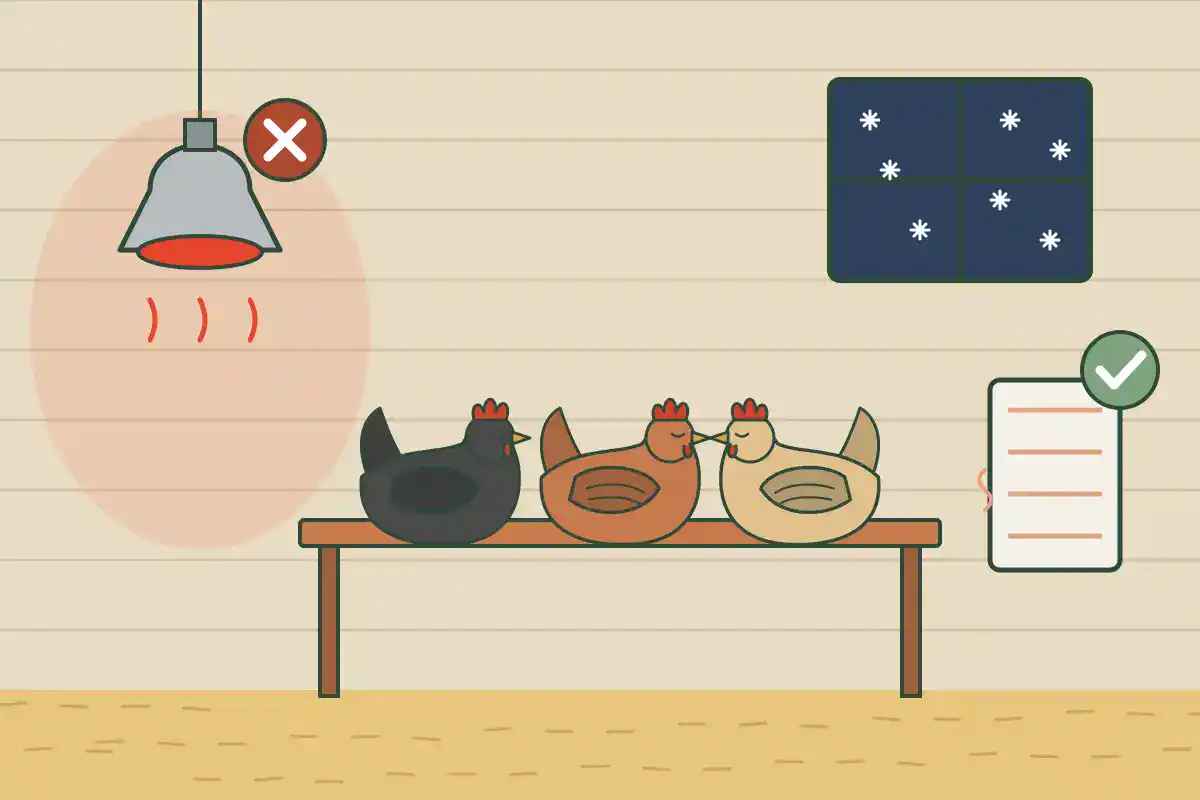

Quick answer: baby chicks need a heat source until they are fully feathered at around 6 weeks, but healthy adult chickens almost never need a heat lamp, even in a cold winter. Heat lamps are one of the leading causes of coop fires, so for chicks a brooder plate is the safer choice, and for adults a poultry-rated radiant panel on a thermostat is the better option on the rare nights when heat really is needed.
The classic red 250-watt bulb in a clamp-on reflector is still on the shelf at every feed store, and it is still the first thing many new keepers reach for when temperatures drop. Here is when a heat lamp actually makes sense, how to set one up as safely as possible if you use one, and the alternatives that do the same job with far less risk.
Do Chickens Need a Heat Lamp?
| Bird | Needs heat? | Best heat source |
|---|---|---|
| Chicks, 0 to 6 weeks | Yes, always | Brooder plate, or a securely mounted heat lamp |
| Young pullets just moved outside | Sometimes, for the first cold nights | Radiant panel near the roost |
| Healthy adult hens | Almost never | A dry, draft-free coop instead |
| Bantams, Silkies, Frizzles in deep cold | Possibly, when the coop stays well below freezing | Radiant panel on a thermostat |
| Sick, injured, molting or lone hens | Possibly | Radiant panel, or a crate in the garage |
Adult chickens wear a down coat under their feathers and keep a body temperature of around 106°F. When it gets cold they fluff up, tuck their feet and huddle on the roost. The University of Minnesota Extension suggests only considering supplemental heat when the coop itself stays below about 35°F, and even then using it carefully. A University of Maine Cooperative Extension specialist told the Bangor Daily News that chickens can keep themselves warm through Maine winters without heat lamps.
If you want the numbers by breed and age, see how cold chickens can tolerate.
Why Heat Lamps Are Risky in a Chicken Coop
A coop is close to the worst place you could put a hot bulb. It is full of dry shavings or straw, feathers and fine dust, and it is home to birds that flap, fly up and bump into things. The Maine fire marshal’s office lists heat lamps alongside extension cords, bedding and water heaters as the top causes of coop fires, and every winter brings news stories of keepers who lost their flock that way.
- The bulb runs hot enough to ignite bedding if it falls or hangs too low.
- Spring clamps slip. A bird landing on the cord or a bump from a door is enough to drop the lamp into the litter.
- Dust builds up on the reflector and bulb and can scorch.
- Extension cords run under bedding or pinched in doors overheat and split.
- Bulbs can shatter if water splashes on them.
- Birds stop acclimating. Hens kept warm do not build up their winter tolerance, so a power outage on the coldest night can hit them much harder than birds that never had heat.
Heat Lamp vs Radiant Panel vs Brooder Plate
| Heat lamp (250W bulb) | Radiant panel | Brooder plate | |
|---|---|---|---|
| Best for | Chicks, if secured well | Adult coops, pullets, sick or small birds | Chicks up to about 6 weeks |
| Fire risk | Highest | Low when poultry-rated and mounted per instructions | Low |
| Power use | About 250 watts | Usually much less | Usually much less |
| Light at night | Yes, which can disturb sleep | No | No |
| How it warms | Heats the area under the bulb | Warms birds sitting near it | Chicks huddle underneath, like a mother hen |
| Upfront cost | Lowest | Moderate | Moderate |
The extra cost of a brooder plate or radiant panel is small next to the price of a coop and a flock. If you are buying something new this winter, skip the bulb.
Heat Lamp for Chicks: Temperatures by Week
Chicks cannot control their own body temperature until their feathers grow in, so they always need heat in the brooder. Many extension guides, including Utah State University Extension, still list a 250-watt infrared lamp as a standard brooder heat source. The usual target is 90 to 95°F under the heat in week one, dropping about 5°F each week.
| Chick age | Temperature under the heat | Heat lamp tip |
|---|---|---|
| Week 1 | 90-95°F | Start the lamp about 18 inches above the bedding and adjust by watching the chicks |
| Week 2 | 85-90°F | Raise the lamp a few inches |
| Week 3 | 80-85°F | Raise again; make sure there is a cooler side |
| Week 4 | 75-80°F | |
| Week 5 | 70-75°F | Turn it off during warm days |
| Week 6+ | Room temperature once fully feathered | Remove heat; acclimate before moving outdoors |
Watch the chicks, not just the thermometer. Chicks piled tightly under the heat are cold. Chicks pressed against the far walls, panting with wings held out, are too hot. Chicks spread out, eating, drinking and napping in small groups are just right. Always leave room for them to move away from the heat. For the rest of the brooder setup, see how to raise baby chicks without a hen.
How to Use a Heat Lamp Safely (If You Use One)
If a heat lamp is what you have, set it up like this:
- Never rely on the clamp alone. Hang the lamp from a chain or wire attached to something solid, and add the clamp as a backup.
- Use a lamp with a wire guard over the bulb and a ceramic (not plastic) socket.
- Keep it well clear of bedding, walls, nest boxes, feeders and anything birds can perch on.
- Plug it straight into a grounded outlet, ideally a GFCI outlet. If you must use an extension cord, use a heavy-duty outdoor cord and never run it under bedding or through a door that closes on it.
- Keep water well away so it cannot splash the bulb.
- Clean dust and cobwebs off the lamp and cord every week.
- Add a thermostat outlet so it only runs when it is actually cold, and keep a smoke detector or fire extinguisher nearby if the coop is close to your house.
- Choose a red bulb over a white one so birds can sleep, and expect them to be less likely to peck at each other under red light.
Better Ways to Keep Adult Chickens Warm
For a grown flock, these do far more than a heat lamp, with none of the fire risk:
- Stop drafts at roost level but keep vents open up high, so damp air can escape. Moist air is what freezes combs. See frostbite in chickens.
- Use deep litter. A thick, dry, composting bed of shavings gives off gentle warmth. Here is how to do the deep litter method.
- Turn roosts wide side up so hens can cover their toes. More in my guide to chicken roosts.
- Feed well before bed. A small handful of scratch in the late afternoon gives them something to digest overnight. See what to feed chickens in winter.
- Keep water from freezing with a heated base made for poultry rather than a lamp. Here are 10 ways to keep chicken water from freezing.
- Pick cold-hardy birds if you live somewhere with real winters. See cold-hardy chicken breeds.
How to Take Chickens Off a Heat Lamp
If your flock has been relying on a lamp, do not pull it on the first freezing night. Start in a mild spell. Run the lamp only at night for a week, then switch to a lower-wattage bulb or a radiant panel, and then remove heat altogether. Spreading it over two or three weeks lets their bodies adjust. With chicks, keep raising the lamp each week until they are fully feathered and comfortable at room temperature.
Heat Lamps for Chickens: The Bottom Line
Chicks need heat, and a brooder plate is the safest way to give it. Healthy adult chickens in a dry, draft-free coop usually need none at all. If you have bantams, Silkies, sick birds or a single hen in a deep freeze, use a poultry-rated radiant panel on a thermostat. If you do use a heat lamp, hang it from a chain, keep it clear of bedding and check it every day. My full guide to keeping chickens warm in winter covers the rest of your winter setup.
Keep reading
Frequently Asked Questions
Do chickens need a heat lamp in winter?
Healthy adult chickens in a dry, draft-free coop usually do not. UMN Extension suggests considering supplemental heat only when the coop stays below about 35°F, and a poultry-rated radiant panel is safer than a heat lamp.
How long do chicks need a heat lamp?
Chicks need heat until they are fully feathered, usually around 6 weeks old. Start at 90 to 95°F in week one and lower it about 5°F each week.
What temperature do chickens need a heat lamp?
There is no single number for adults. Most hardy, healthy hens handle well below freezing. Bantams, Silkies, sick or molting birds and young pullets may need a safe heat source when the coop stays well below freezing.
Are heat lamps safe for chickens?
They are one of the most common causes of coop fires. If you use one, hang it from a chain rather than relying on the clamp, use a wire guard, keep it away from bedding and water, and plug it into a grounded outlet.
Red or white heat lamp for chickens?
Red is usually the better choice. It lets chickens and chicks rest at night and is often credited with reducing pecking compared with bright white light.
How high should a heat lamp be above chicks?
Start about 18 inches above the bedding and adjust by watching the chicks. Raise it a few inches each week as they grow and need less heat.